I wrote it for my oldest daughter when she was 16. Ten years later, I rewrote it with a heartbreaking new understanding of what she'd been experiencing. And in the process, I discovered not only the book's title, but a purpose that would change my life.
I didn't set out to become a children's book author.
I was a mother trying to help my children navigate things I couldn't always protect them from.
And the very first book I ever wrote began long before I understood just how much my children needed the messages I was trying to give them.
I wrote it for my oldest daughter.
At the time, I knew she needed encouragement. I wanted to give her something that would help her navigate difficult feelings, find comfort when life was overwhelming, and recognize that happiness wasn't something she had to wait for someone else to give her.
What I didn't know was the full extent of what she was experiencing.
I didn't yet understand what was happening to her or how deeply those experiences could affect the way she saw herself and the world.
I was writing from a mother's instinct.
An instinct that told me my daughter needed something.
But I didn't yet understand just how much.
Ten years later, I would return to that manuscript with an entirely different understanding of my daughter's life—and my own.
And everything about the book would change.
Including its name.
Sometimes We Recognize That Our Children Are Struggling Before We Understand Why
One of the hardest things about being a parent is that we don't always know what our children are carrying.
We see their behavior.
We notice changes in their moods.
We recognize when something seems off.
But we don't always know what's happening beneath the surface.
And children don't always have the words to tell us.
Sometimes they don't fully understand what's happening themselves.
Sometimes they're trying to make sense of conflicting feelings, confusing relationships, or circumstances they have very little control over.
And sometimes the adults who love them most don't yet have the information they need to understand the bigger picture.
That's where I was when I first wrote the story that would eventually become Find Your Happy.
I wanted my daughter to have something she could return to when life felt difficult.
Something that reminded her that her feelings mattered.
That she wasn't powerless.
That there were things she could do to find moments of peace, comfort, and happiness, even when everything around her wasn't the way she wished it could be.
I didn't realize how important those lessons would become.
I was trying to give my daughter tools for circumstances I didn't yet fully understand.
The First Version Was Written With Love. The Second Was Written With Understanding.
For years, that original manuscript remained unpublished.
Life continued.
Our family went through enormous changes.
And as time passed, I began to understand things about my marriage, my children's experiences, and the effects of long-term emotional abuse that I hadn't understood when I first put pen to paper.
My perspective changed.
Not because I loved my children any differently.
But because I finally had a much clearer understanding of what we'd all been navigating.
And that understanding changed how I thought about helping children.
I began to recognize how deeply difficult environments can affect a child's emotional world.
How children can begin to feel responsible for circumstances they didn't create.
How they can lose confidence in their own feelings.
How anxiety can become part of everyday life when the world around them feels unpredictable.
And how important it is for children to have tools that help them reconnect with themselves.
When I returned to that manuscript ten years after writing it, I wasn't the same woman who had written the first version.
I had lived through things I never imagined would happen.
I had learned lessons I wished I'd understood much earlier.
And I had a far deeper appreciation for the emotional skills children need when life becomes difficult.
I didn't just want to tell my daughter that she deserved to be happy. I wanted to help her understand how to find her way back to herself when happiness felt out of reach.
So I rewrote it.
The Rewrite Changed Everything
The more I worked on the story, the clearer its message became.
I wasn't trying to teach children to be happy all the time.
I wasn't trying to tell them that difficult feelings were bad.
And I certainly wasn't trying to suggest that children should simply think positively when something in their lives was genuinely painful or frightening.
I wanted something much more meaningful.
I wanted children to understand that emotions come and go.
That sadness, anger, worry, and disappointment are all part of being human.
That they don't have to feel guilty for having difficult feelings.
And that while they can't always control what happens around them, they can learn ways to care for themselves through those feelings.
I wanted to help them recognize that they could pause.
Breathe.
Notice what they were feeling.
Find comfort in small things.
Reach out to someone safe.
And begin discovering what helps them feel grounded again.
Because happiness isn't about pretending the hard things aren't happening. It's about learning that the hard things don't have to take away every possibility of peace or joy.
That's what the story had been trying to say all along.
I just hadn't fully understood it the first time I wrote it.
And Then I Found the Title: Find Your Happy
There's something about revisiting something you've created with a decade of additional life experience.
Sometimes you discover that what you were trying to say was bigger than you realized.
As I rewrote the manuscript, the heart of the story became clearer and clearer.
And with that clarity came its title.
Find Your Happy.
Three simple words.
But to me, they represented something incredibly important.
Find. Your. Happy.
Not someone else's version of happiness.
Not happiness that depends entirely on another person's approval.
Not happiness that requires everything around you to be perfect.
And not happiness that means ignoring pain or pretending difficult things aren't happening.
Your happy.
The things that help you feel connected to yourself.
The moments that bring you peace.
The choices that help you feel grounded.
The small pieces of joy you can discover even when life isn't easy.
And perhaps most importantly, the understanding that your emotional well-being matters.
That title captured what I'd wanted my daughter to know from the very beginning.
But it took me ten years—and a completely different understanding of our experiences—to find the words.
When You Can't Change Everything Around Your Child
This is something I think about often.
As parents, we want to fix things for our children.
We want to take away their pain.
We want to protect them from disappointment, fear, confusion, and hurt.
And when we recognize that someone or something is affecting their well-being, our instinct is to make it stop.
But there are circumstances where we can't immediately change everything.
Maybe a child is navigating two households with very different emotional environments.
Maybe they're experiencing bullying.
Maybe there's conflict within the family.
Maybe they're dealing with a loss, a major transition, or something they don't yet know how to explain.
We can advocate for our children.
We can listen.
We can seek appropriate support and work to make their environments safer.
And we absolutely should.
But we also need to recognize that there may be moments when we aren't physically beside them.
What can we give our children that they can carry with them when we can't be there?
That question has shaped so much of my work.
And Find Your Happy was where it began.
I wanted my daughter to understand that her emotions belonged to her.
That she was allowed to feel whatever she felt.
That difficult feelings weren't a sign of weakness.
And that there were things she could learn to do to help herself through difficult moments.
Not because it was her responsibility to fix the circumstances around her.
But because she deserved tools that could help her feel more secure within herself.
Happiness Isn't the Absence of Difficult Feelings
One of the things I think we get wrong when teaching children about happiness is that we sometimes make it sound like a destination.
As though being happy means never being sad.
Never being anxious.
Never being angry.
Never being disappointed.
But that's not how emotions work.
And I didn't want my daughter—or any child—to believe that feeling unhappy meant they were doing something wrong.
A child can be having a difficult time and still be emotionally healthy.
They can be sad about something unfair.
Angry about a boundary being crossed.
Worried about something uncertain.
Or disappointed when life doesn't go the way they hoped.
Those feelings deserve acknowledgment.
The goal isn't to eliminate them.
It's to help children understand them and develop healthy ways to respond.
Sometimes that means talking to someone they trust.
Sometimes it means taking a break.
Sometimes it means moving their body, spending time outside, creating something, or finding a quiet moment.
Sometimes it means recognizing that a feeling is temporary, even when it feels enormous.
And sometimes it means asking for help with something they shouldn't have to handle alone.
Finding your happy doesn't mean you have to be happy right now.
It means learning that you can care for yourself through the moments when you're not.
That's the lesson I wanted the book to teach.
Why Emotional Skills Matter So Much for Children Experiencing High-Conflict Family Dynamics
When children are living through difficult family circumstances, their emotional world can become complicated.
They may love people whose behavior hurts or confuses them.
They may feel caught between competing expectations.
They may worry about upsetting someone.
They may struggle to understand why one environment feels different from another.
And they may experience emotions they don't know how to explain.
In those circumstances, it's especially important that children aren't made to feel responsible for fixing adult problems.
They shouldn't have to manage other people's behavior.
They shouldn't have to choose sides.
And they shouldn't have to pretend they're okay when they're not.
What they need are safe, dependable adults who listen, protect them, and help them make sense of what they're experiencing.
But they can also benefit from learning emotional skills that belong to them.
Recognizing their feelings.
Understanding what helps them feel calm.
Knowing when to ask for help.
Learning that their emotions don't make them bad or difficult.
And discovering that they can experience moments of joy without denying the reality of what they're going through.
Children shouldn't have to control their circumstances to deserve emotional peace.
That's one of the most important messages I wanted Find Your Happy to carry.
Three Things I Hope Every Parent Teaches Their Child About Happiness
1. You don't have to be happy all the time.
This might seem like an unusual lesson for a book called Find Your Happy, but I think it's one of the most important.
Children need to know that every emotion has a place.
Sadness isn't failure.
Anger isn't automatically bad.
And anxiety doesn't mean there's something wrong with them.
We can help children understand that feelings are information, not something to be ashamed of.
2. You can learn what helps you feel better.
Every child is different.
Some find comfort in movement.
Others in creativity, music, nature, quiet time, or connection with someone they trust.
Helping children discover what supports their emotional well-being gives them tools they can use throughout their lives.
And those tools become more valuable as they grow.
3. Your happiness matters, even when someone else is unhappy.
This is especially important for children who are sensitive to the emotions of others.
A child can care about someone who's upset without believing they have to fix that person's feelings.
They can have moments of joy even when circumstances are difficult.
And they can learn that their emotional well-being is not something they have to sacrifice to keep everyone else comfortable.
The Book That Started My Career as an Author
When I finished rewriting Find Your Happy, I faced a decision.
For ten years, it had been something personal.
A story I'd written for my daughter.
A message born from my love for her, my concerns as a mother, and eventually, a much deeper understanding of what our family had experienced.
I could have kept it that way.
I could have left it as something that belonged only to us.
But I kept thinking about other children.
Other parents.
Other families trying to navigate difficult circumstances.
Other mothers and fathers who could see their children struggling but didn't always know how to help.
And I realized that the message I'd wanted to give my daughter might be something other children needed, too.
So I made the decision to publish it.
That decision changed the direction of my life.
What began as a personal story for my oldest daughter became the beginning of my career as an author.
And eventually, the foundation for an entire collection of books created to help children develop the internal skills they need to navigate life.
Books about boundaries.
Inner strength.
People-pleasing.
Self-worth.
Personal responsibility.
And learning to trust themselves.
Each one inspired by lessons I wanted my own children to understand.
Each one written with the hope that other children might benefit from them, too.
But it all started with Find Your Happy.
A manuscript I wrote before I understood the full story.
A manuscript I returned to ten years later.
And a message that became more meaningful as I began to understand what my daughter had been going through.
Sometimes We Don't Understand the Importance of What We're Creating Until Years Later
Looking back, there's something incredibly emotional about the journey of this book.
I wrote the first version because I loved my daughter and wanted to help her.
I rewrote it because I understood so much more about what she had been experiencing.
And I published it because I realized the lessons inside it could help other children, too.
In many ways, Find Your Happy grew alongside my own understanding.
The first version came from instinct.
The second came from experience.
And the decision to publish came from purpose.
I couldn't go back and give my daughter the understanding I didn't yet have ten years earlier.
I couldn't change what had already happened.
But I could take what I'd learned and create something meaningful from it.
Something that might help another child recognize their feelings.
Something that might help another parent start an important conversation.
Something that might give a child a little more confidence in their ability to navigate difficult emotions.
And something that might remind them that happiness isn't something they have to earn by keeping everyone else happy.
It's something they deserve to experience for themselves.
Why I Wrote Find Your Happy
I wrote Find Your Happy for my oldest daughter before I fully understood what she was going through.
Ten years later, I rewrote it with a new understanding of her experiences and the emotional tools I wished I'd been able to give her sooner.
That rewrite helped me discover the book's title.
And when I finally decided to publish it, I discovered something else.
A purpose.
A way to turn some of the most difficult lessons of my life into something that could help other families.
I never imagined that the little story I'd written for my daughter would become the beginning of my career as an author.
But perhaps that's the most meaningful part of it all.
The book I wrote to help my daughter find her happy ultimately helped me discover a new part of my own.
And today, every time a parent tells me that one of my books helped their child—or helped them understand something about themselves—I think about how this journey began.
With a mother.
A daughter.
A story.
And a message that took ten years to fully understand.
You can't always control what happens around you. But you deserve support, understanding, and the tools to find moments of peace and happiness within your own life.
That's why I wrote Find Your Happy.
And that's why I finally decided to share it with the world.
Discover Find Your Happy

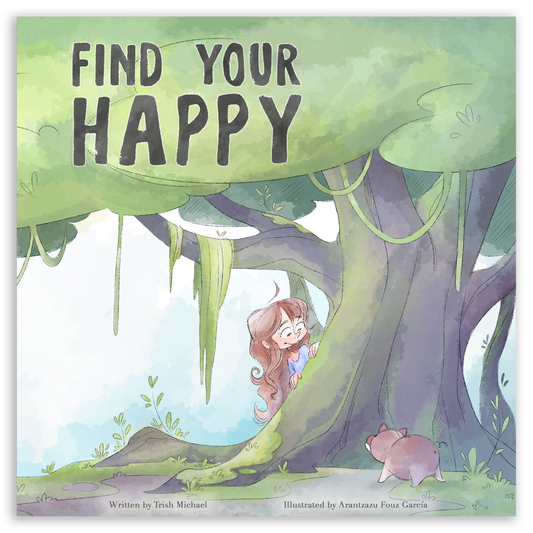
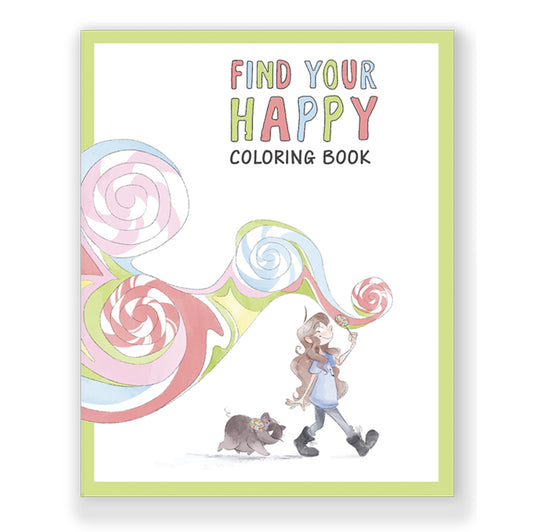
Find Your Happy is a beautifully illustrated children's hardcover book that helps kids understand big emotions, develop emotional awareness, and discover healthy ways to navigate difficult feelings.
Originally written for my oldest daughter and rewritten ten years later with a deeper understanding of her experiences, it's the book that launched my career as an author.
Its message grows with children, offering younger readers a gentle introduction to emotional well-being while giving older children, teens, and even adults meaningful lessons about self-awareness, resilience, and finding peace through difficult circumstances.
Especially helpful for children experiencing anxiety, family conflict, or other emotionally challenging situations, Find Your Happy reminds them that their feelings matter—and that they deserve tools to help them navigate those feelings.
Because every child deserves to know that their happiness matters.