For years, I waited for someone to save me. Everything changed when I realized I had the strength to save myself all along.
I didn't set out to become a children's book author.
I was a mother trying to give my children the lessons I wished someone had taught me when I was young.
And perhaps no lesson changed my life more than this one:
You don't have to wait for someone else to be the hero of your story.
For a very long time, that's exactly what I did.
I waited.
I waited for someone to recognize what was happening to me.
I waited for someone to step in.
I waited for someone to make things better.
I waited for someone to see how hard I was trying, how much I was carrying, and how desperately I needed things to change.
And somewhere along the way, I began to believe that my circumstances would only change when someone else changed them.
I didn't recognize it at the time, but I'd given away an enormous amount of my power.
Not because I was weak.
But because I'd spent so long in circumstances that made me feel powerless.
And when you feel powerless for long enough, you can forget that you have power at all.
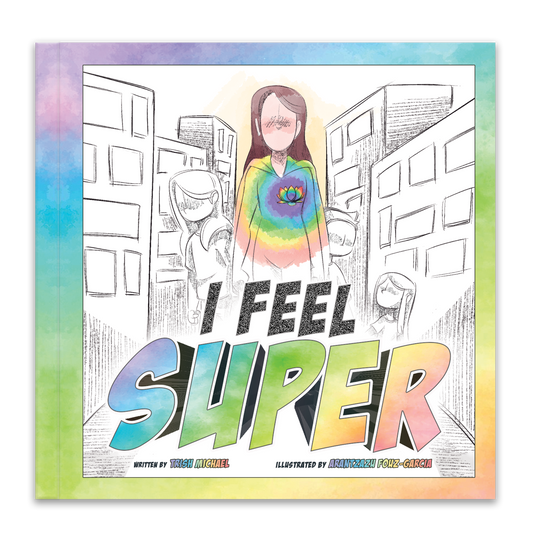
That's the lesson behind I Feel Super.
And it's one I wanted my children to learn long before they ever needed to fight to get that power back.
When You Spend Years Waiting to Be Rescued
I spent 20 years in an abusive marriage.
For much of that time, I was trying to survive circumstances that seemed completely outside my control.
I kept hoping things would get better.
That someone would finally understand.
That the right conversation, the right explanation, or the right person stepping in would somehow change everything.
And I don't think that's unusual.
When you're living through something difficult, especially something that has gone on for years, it's natural to want someone to help.
We want someone to recognize what's happening.
To tell us we're not imagining it.
To stand beside us.
To make the hard things stop.
And there's nothing wrong with needing help. In fact, getting support can be one of the strongest things we ever do.
But there's a difference between accepting help and believing that someone else has to come along before your life can change.
I had spent so much time waiting for someone to rescue me that I hadn't fully recognized my own ability to change my circumstances.
I knew how to survive.
I knew how to endure.
I knew how to keep going when things were hard.
What I hadn't yet realized was that those same qualities could help me build something entirely different.
I wasn't just capable of surviving.
I was capable of creating a new life.
The Realization That Changed Everything
At some point, I began to understand something that completely changed the direction of my life.
No one else could take responsibility for building the life I wanted. That part belonged to me.
Other people could help.
They could encourage me.
They could offer resources, guidance, opportunities, and support.
But they couldn't make my choices for me.
They couldn't decide what kind of life I wanted.
And they couldn't do the work of rebuilding it.
That was mine to do.
And while that might sound like an enormous responsibility, for me, it was incredibly freeing.
Because suddenly, my future wasn't entirely dependent on someone else changing.
I didn't have to wait for an apology.
I didn't have to wait for someone to recognize what they'd done.
I didn't have to wait for the circumstances around me to become perfect.
I could begin making changes with what I had, where I was.
And the most extraordinary part was realizing that the strength I needed wasn't something I had to go out and find.
It was already there.
It had been there through every difficult day.
Every setback.
Every moment I thought I couldn't possibly keep going, but did.
I'd spent years looking for someone strong enough to save me.
And all that time, I'd been demonstrating an extraordinary amount of strength myself.
I just hadn't recognized it for what it was.
I Didn't Suddenly Become Strong. I Finally Recognized That I Was.
I think we sometimes misunderstand what strength looks like.
We imagine strong people as fearless.
Confident.
Certain.
People who always know what to do and never question themselves.
But that's not what strength looked like for me.
Sometimes strength looked like getting out of bed when I was exhausted.
Sometimes it looked like making a decision I was terrified to make.
Sometimes it looked like asking for help.
Sometimes it looked like starting over when I had no idea how things would work out.
And sometimes it looked like taking one small step when everything in me wanted to give up.
Strength isn't always loud. Sometimes it's simply the part of you that refuses to stop trying.
The more I recognized that, the more my perspective changed.
Instead of focusing entirely on what I couldn't control, I began looking at what I could.
Instead of waiting for someone to create a better future for me, I started making decisions that moved me toward one.
Instead of seeing myself only through the lens of what I'd experienced, I began seeing myself through the lens of what I was capable of.
And that changed everything.
Not overnight.
Not without setbacks.
But one decision at a time.
I Didn't Want My Kids to Wait as Long as I Did to Discover Their Own Strength
As a mother, there was something about this realization that stayed with me.
I'd spent so many years not recognizing my own power.
And I didn't want my children to grow up doing the same thing.
I didn't want them to believe that their circumstances defined what was possible for them.
I didn't want them to see themselves as helpless when life became difficult.
I didn't want them to believe they needed someone else's permission to be confident, capable, or brave.
And I certainly didn't want them waiting for someone else to become the hero of their lives.
I wanted them to know they were capable of being their own heroes.
Not because they would never need help.
Not because they should have to handle everything alone.
And not because they were responsible for fixing situations that adults should be protecting them from.
But because there is an enormous difference between knowing that something is difficult and believing that you're powerless.
I wanted them to recognize their own abilities.
To understand that courage doesn't mean never being afraid.
To see that they could learn new things, solve problems, overcome challenges, and make meaningful choices.
And to know that even when they couldn't control what was happening around them, there were still things within themselves they could develop and trust.
That's why I wrote I Feel Super.
Every Child Deserves to Feel Like the Hero of Their Own Story
Think about the superheroes children grow up admiring.
They're strong.
They're brave.
They overcome challenges.
They help people.
They do things that seem impossible.
And children love imagining what it would be like to have those kinds of powers.
But what if we could help them recognize the extraordinary qualities they already possess?
What if we taught them that courage is a superpower?
That kindness is a superpower?
That perseverance is a superpower?
That learning to trust themselves, make good decisions, and keep trying when things get difficult are all forms of strength?
What if the most important superhero a child ever discovered was the one looking back at them in the mirror?
That's the idea I wanted to bring to life.
Because children don't need to fly.
They don't need to be invisible.
They don't need extraordinary abilities that only exist in comic books.
They need to recognize the very real abilities they already have—and understand that those abilities can grow.
They can learn to be brave.
They can learn to solve problems.
They can learn to speak up.
They can learn to believe in themselves.
And they can learn that a difficult chapter doesn't have to define the rest of their story.
When Children Feel Powerless, They Need More Than Reassurance
One of the hardest things about parenting through difficult circumstances is knowing that we can't control everything our children experience.
We can't prevent every disappointment.
We can't eliminate every challenge.
We can't guarantee that everyone they encounter will treat them kindly or fairly.
And when children are navigating high-conflict family situations, emotional stress, bullying, or other difficult experiences, they may feel that they have very little say in what happens around them.
As parents, our instinct is often to reassure them.
To tell them everything will be okay.
To promise we'll protect them.
And of course, children need reassurance, safety, and dependable adults.
But I believe they also need something else.
They need opportunities to recognize their own capabilities.
They need to understand that they can have feelings without being controlled by them.
That they can face challenges without assuming they'll fail.
That they can ask for help without seeing themselves as weak.
And that even when they cannot change a situation, they may still have choices about how they care for themselves and what they do next.
This isn't about making children responsible for adult problems.
It's about helping them develop confidence in their ability to navigate the world.
Because I know firsthand how difficult it can be to rebuild that confidence once you've lost it.
And I wanted to help my children develop it from the beginning.
The Difference Between Being Saved and Being Supported
There's an important distinction I want to make.
When I say I realized it was my job to save myself, I don't mean that people experiencing abuse should be expected to get out without help.
I don't mean that children should have to protect themselves from harmful adults.
And I don't mean that asking for support is a weakness.
Quite the opposite.
Sometimes our strongest decisions involve reaching out.
Finding safe people.
Getting professional help.
Accepting resources.
Or allowing someone to stand beside us while we do something difficult.
Being the hero of your own story doesn't mean doing everything alone.
It means recognizing that your voice, your choices, and your future matter.
It means understanding that support can help you move forward without taking away your agency.
And it means learning that you are not simply a passive character in your own life.
You have a part to play in how your story unfolds.
That's the message I wanted children to take from I Feel Super.
Not that they have to be invincible.
But that they're capable.
And that being capable doesn't mean never needing anyone else.
Three Things I Hope Every Parent Teaches Their Child About Inner Strength
1. Being brave doesn't mean you're not afraid.
I spent years thinking strength meant having everything figured out.
But some of the bravest things I've ever done were things I did while absolutely terrified.
Children need to know that fear doesn't automatically mean they can't do something.
Sometimes courage is simply taking the next safe step, even when it's difficult.
2. You have more abilities than you realize.
When children face challenges, it's easy for them to focus on what they can't do.
We can help them recognize what they can do.
What they've already overcome.
What they've learned.
What they've accomplished.
And how much they're capable of growing.
Confidence isn't built by telling children they're good at everything.
It's built by helping them recognize their real strengths and discover new ones.
3. You can ask for help and still be the hero of your own story.
This one matters enormously to me.
Being strong doesn't mean being alone.
Children should never feel that needing help makes them less capable.
In fact, recognizing when you need support and knowing how to ask for it are important life skills.
The goal isn't to raise children who never need anyone.
It's to raise children who know they have value, ability, and a voice—even when life is difficult.
Why I Feel Super Isn't Just for Little Kids
One of the things I hear most about my books is that their meanings grow with children.
A younger child might read I Feel Super and simply feel excited about the idea that they have superpowers of their own.
They might start recognizing kindness, bravery, or determination as something special.
An older child might begin connecting those ideas to challenges at school, friendships, or things they're learning to do independently.
A teenager might recognize a much deeper message about identity, confidence, and personal responsibility.
And an adult might read it and realize that they've spent much of their life waiting for someone else to give them the confidence or permission to make a change.
Because the truth is, a lot of adults are still waiting to discover the strength they already have.
I know I was.
And that's why I believe this message matters at every age.
I Spent Years Waiting for Someone to Save Me. I Don't Want My Children to Do the Same.
Looking back, one of the most important changes in my life wasn't something that happened around me.
It was something that changed within me.
I stopped seeing myself only as someone who needed rescuing.
I started recognizing myself as someone who had already survived extraordinary things.
Someone who could learn.
Someone who could make difficult decisions.
Someone who could rebuild.
Someone who could create a future that looked very different from the past.
And when I began believing that, I started acting differently.
I began making choices from a place of possibility rather than helplessness.
I started rebuilding the parts of my life that had been damaged.
And I began creating a life that felt like mine.
I hadn't been waiting for strength to arrive. I'd been waiting to recognize the strength that was already there.
That's the realization I wanted to give my children.
I wanted them to understand that their circumstances might be difficult, but that didn't make them powerless.
That they might need help, but that didn't make them weak.
That they might experience setbacks, but that didn't mean their story was over.
And that they didn't have to wait for someone else to tell them they were capable.
They already were.
That's why I wrote I Feel Super.
Because I spent far too many years waiting for someone else to become the hero of my story.
And I wanted my children to know something I wish I'd understood much sooner:
The hero you've been waiting for might just be you.
Discover I Feel Super

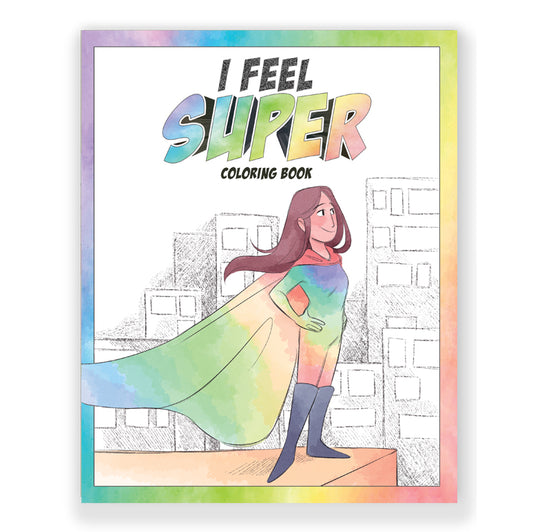
I Feel Super is a beautifully illustrated children's hardcover book that helps kids recognize their inner strength, develop confidence, and understand that they have the power to make meaningful choices in their own lives.
It's a message that grows with children, helping younger readers discover their everyday superpowers while encouraging older kids and teens to recognize their resilience, independence, and ability to overcome challenges.
Especially meaningful for children navigating difficult circumstances, I Feel Super reminds them that while they can't control everything around them, they can develop confidence in who they are and what they're capable of.
Because every child deserves to recognize the hero within.